
For most people, binaural beats are about as low-risk as it gets: quiet, steady tones through a pair of headphones. But “low-risk” isn’t “no-risk,” and a few people should be careful. Here’s what to know before you start.
Who should check with a doctor first
- People with epilepsy or a seizure disorder. Rhythmic sound (and rhythmic light) can be a concern for some people with seizure conditions. Talk to your doctor before using beats or pulsing tones.
- People with a heart rhythm device or heart condition. There’s no clear evidence of a problem, but if you have a pacemaker or a rhythm condition, it’s worth a quick conversation.
- Anyone with a mental health condition or on medication that affects alertness. Binaural beats aren’t a treatment and shouldn’t replace one. Never stop or change medication without your prescriber.
- Children and pregnant people. There’s very little research in either group, so check with a professional first.
Common side effects
When people do notice side effects, they’re usually mild and go away when the sound stops:
- Headache or ear fatigue, almost always from the volume being too high.
- Drowsiness, especially with Delta and Theta tones.
- Feeling “off” or uneasy. Some tones just don’t sit right with some people. (I wrote about why some frequencies feel uncomfortable.)
- Annoyance from clicks or harsh edges. That’s a sound-quality problem, not you. It’s the reason I made every tone in Binaural Tones seamless, with no clicks on loops, starts, stops or switches.
Never use sleep tones while driving
This one matters. Delta, Theta and Morphing journeys like Wind Down are designed to make you drowsy. Don’t use them while driving, operating machinery or doing anything that needs your full attention. Save them for bed, the couch or the meditation cushion.
How to listen safely
Keep the volume low
Binaural beats work at a quiet volume. You should be able to talk over them. Louder doesn’t make them work better, and long sessions at high volume can damage your hearing.
Start short
Begin with 15 to 20 minutes and see how you feel. There’s more in how long, how often and when to listen.
Stop if something feels wrong
Dizziness, a headache that doesn’t go away, or feeling anxious are signs to stop. Try a different tone, a lower volume, or skip it that day.
Use decent headphones
Nothing expensive, just a pair that fits comfortably and sends a separate signal to each ear. Here’s my guide to the best headphones for binaural beats.
My own approach
I use Binaural Tones almost every day, mostly for focus. I have ADD, and it helps me block out distractions and stay centered. I keep the volume low, I don’t use sleep tones unless I’m actually going to sleep, and I treat it as one tool alongside good habits, not a fix for everything.
Try it yourself
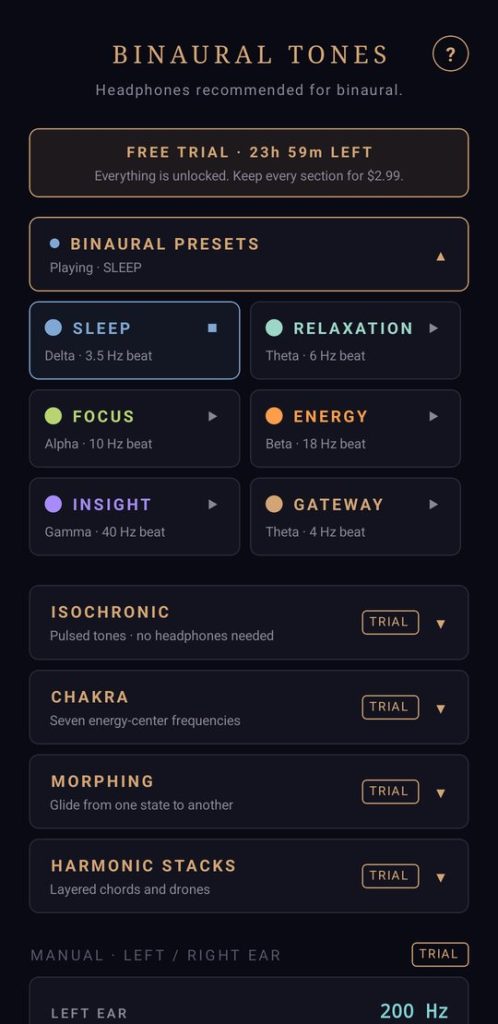
You can hear a five-second sample of every preset, free, on the Try It page. If you want the full experience, download Binaural Tones on Google Play. Everything is unlocked for your first 24 hours. Try everything, then let me know what you thought.
Binaural Tones is a relaxation and focus aid, not a medical treatment. This post is general information, not medical advice. If you have epilepsy or any condition affected by sound, check with your doctor before using it.