

Lots of people work with something playing. The trouble is that most music pulls at your attention — lyrics especially compete with the words you’re trying to read or write. A steady tone gives you the sense of a soundtrack without anything to follow.
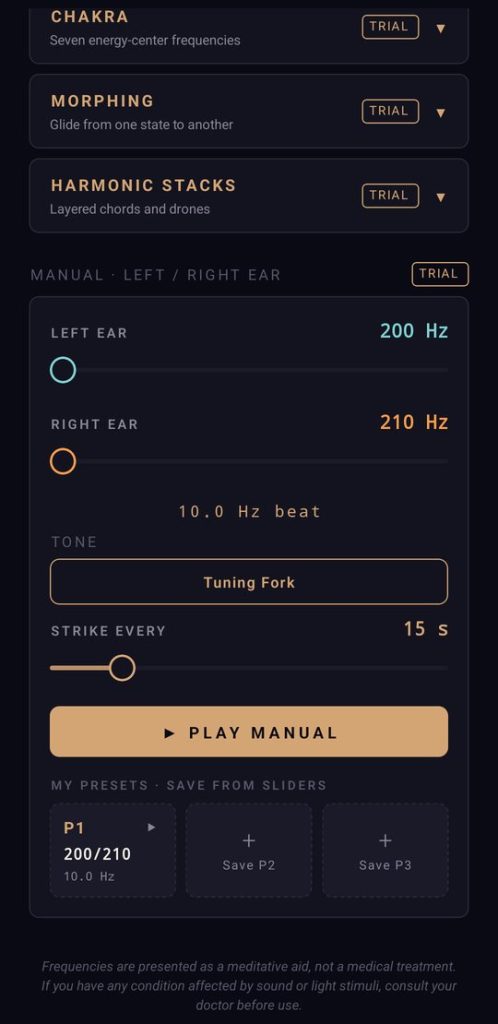
Which tone for which kind of work
- Focus (Alpha, 10 Hz) — reading, writing, studying, design work. Calm, settled attention.
- Energy (Beta, 18 Hz) — admin, email, problem-solving, anything that needs pace.
- Focus In (Morphing, Alpha → Beta) — for getting started. It begins relaxed at 8 Hz and climbs to 14 Hz, easing you from “settling in” to “working.”
- Isochronic Focus (10 Hz) — the same rate with no headphones needed, handy in a shared office.
Pair it with a timer
Tones work well as a start signal for a focused block. Try this:
- Pick one task. Close everything that isn’t that task.
- Start your tone and a 25 or 50-minute timer at the same time.
- Work until the timer ends. Stop the tone. Take a real break — stand up, look out a window.
- Repeat.
After a few days, starting the tone becomes a cue to drop into work, much like a coffee-shop regular who settles in the moment they sit down.
Keep it in the background
The tone should be the quietest thing in the room. If you notice it constantly, it’s too loud. Many people also find that a tone they love at first gets old — rotating between Focus, isochronic Focus and a Harmonic Stack like Open Fifth keeps it fresh.
Set realistic expectations
Research on binaural beats and attention shows small effects at best, and results vary from person to person. What a tone reliably does is mask distracting noise and give your work session a clear beginning and end. For many people, that’s the real win.
Hear it for yourself: every tone mentioned here has a free five-second sample on the Try It Free page.